
Correcting a common, costly misconception about penicillin allergies
Emily Russell Levy, DO, Hospital Medicine, is Good Samaritan’s physician champion for a new enterprise-wise initiative, Penicillin Allergy Delabeling using the PEN-FAST Calculator, recently approved as a standardized best practice to safely remove incorrect allergy labels from patient charts.
“Penicillin allergy delabeling is important because it allows us to be good stewards of antibiotic therapy by using the most targeted treatment,” Russell Levy said. “It combats antibiotic resistance, it reduces side effects and complications of broader-spectrum antibiotics, it reduces healthcare costs, and it even decreases length of hospital stay.”
More than 90% of reported penicillin allergies are not true allergies. Penicillin delabeling is a high-value, low-risk intervention that improves care quality and reduces harm to patients and organizational and patient costs.
How does the delabeling process work using the PEN-FAST Calculation?
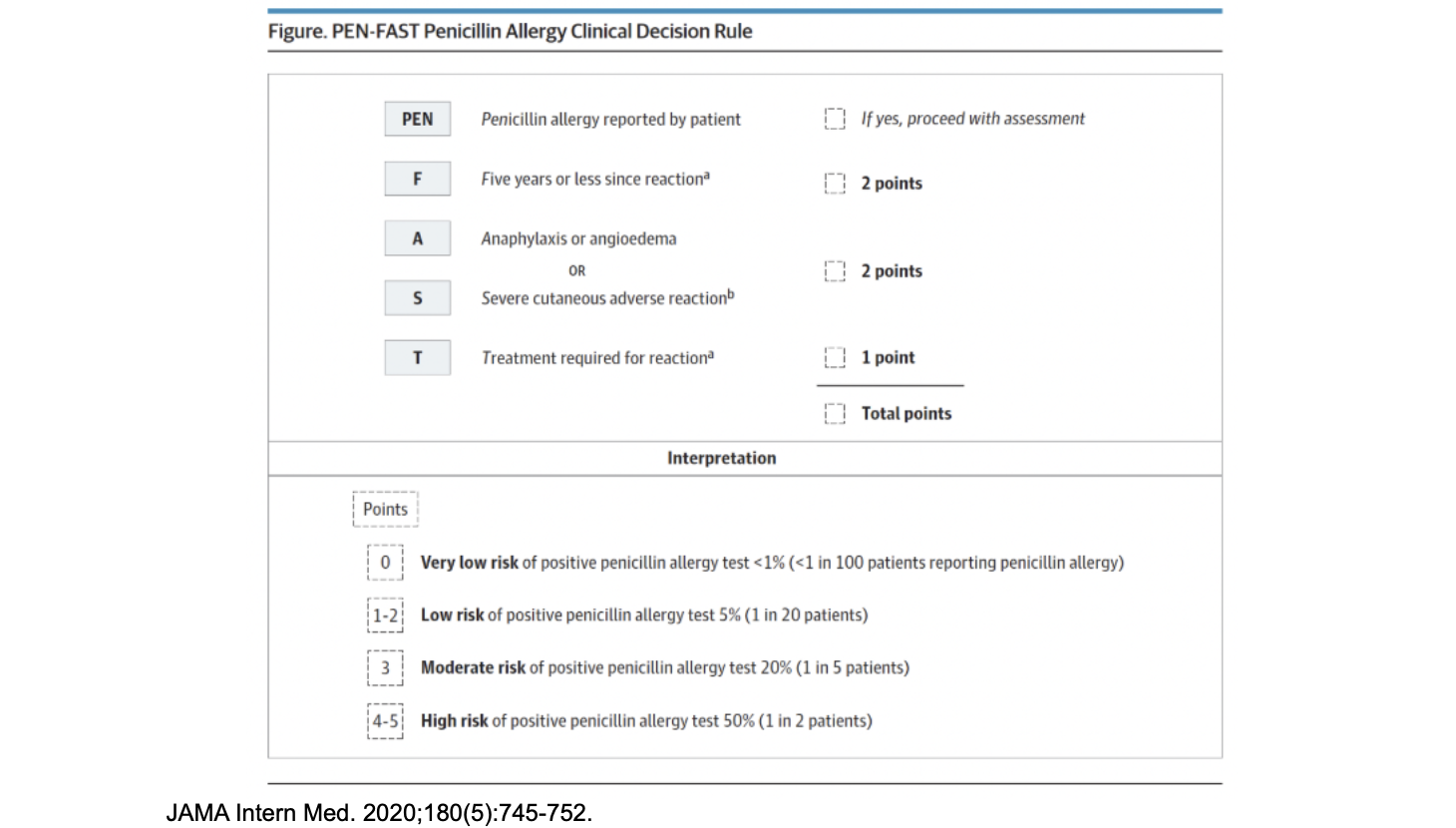
Risk assessment: A healthcare professional reviews the history of the reaction to determine risk.
PEN-FAST score of <3 points equals low‑risk: Low probability of a positive penicillin oral challenge test (<5% risk)
Direct oral challenge: For low-risk patients, a single dose of amoxicillin is administered in a hospital setting to verify tolerance.
Removal: If the patient tolerates the oral challenge, the allergy label is removed from the medical record, and the patient is notified.
“Our pharmacists are usually completing PEN-FAST scoring while they are doing our medication reconciliations,” Russell Levy said. “The score can be found under the allergies tab.”
Epic workflow support
Epic supports the penicillin allergy delabeling process through standardized pharmacist workflows. Pharmacists document the PEN‑FAST score in the Pharmacy Minimum Data flowsheet, which can then be pulled directly into the allergy comments using the smart phrase .rxpenfast.
Patients who meet low‑risk criteria based on the PEN‑FAST score are eligible for evaluation using the Intermountain Penicillin Allergy Challenge order set, supporting safe delabeling when clinically appropriate.
Patient education resources
Penicillin allergy fact sheets:
Patient safety and outcomes
Alternative antibiotics carry:
2–3 times higher risk of C. difficile.
Higher rates of acute kidney injury and drug toxicity.
Less effective treatment for common infections.
Delabeling enables narrower, first‑line, guideline‑recommended therapy with better efficacy and fewer side effects.
Unconfirmed allergy labels lead to the use of broader-spectrum antibiotics, which can cause increased side effects, antibiotic resistance, and poorer health outcomes.
Cost and impact
$1,500–$4,000 savings per inpatient by avoiding higher cost alternative antibiotics, reducing length of stay, and reducing antibiotic-related and infection-related complications
One‑time delabeling provides lifelong benefit across future encounters
What this means for daily practice
Simpler antibiotic choices for hospitalists, nurses, and pharmacists
More accurate allergy lists and safer medication administration
Strong alignment with antimicrobial stewardship, quality, and value‑based care goals
Additional resources
More information is available on the Antimicrobial Stewardship website.
Questions? Contact Russell Levy. You also can reach out to Whitney Buckel, PharmD, or Robert Silge, MD.