
Innovative AI Pilot Aims to Improve Pneumonia Outcomes
Innovation in health care works best when it’s guided by trusted clinicians who understand both patient needs and real-world workflows. Andy D’Alessandro, MD, and Bill Hilty, MD, emergency department physicians at St. Mary’s Regional Hospital, are doing just that by leading the pilot of an AI tool called ePneumonia across the Peaks Region. The tool shows measurable promise for improving a variety of outcomes for patients at risk for or diagnosed with pneumonia.
Supporting clinicians with smarter tools
ePneumonia is a clinical decision support tool designed to help emergency clinicians quickly identify and manage pneumonia using information that already exists in the patient’s chart. The tool reviews vital signs, lab results, clinical notes, and AI-assisted analysis of chest X-rays to estimate the likelihood of pneumonia.
Physicians can use ePneumonia for real-time recommendations to support severity assessment, patient disposition, and antibiotic selection.
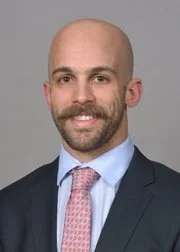
“The tool is designed to support decision-making, not replace it,” Dr. D’Alessandro said. “The clinician remains at the helm of decision-making and the recommendations can be accepted, modified, or rejected based on clinical judgment.”
Pictured: Andy D’Alessandro, MD
Proven improvements in outcomes
The origin story of this improvement began in the mid-1990s with a paper-based clinical decision support tool with standardized order sets. It demonstrated improved mortality but was limited by poor integration into clinical workflows.
After transitioning to an electronic version and achieving significant mortality reductions, ePneumonia was adopted by all emergency departments in Canyons and Desert in 2017. Among successful clinical innovations, their implementation has had meaningful benefits across several patient outcomes:
Antibiotics were started earlier and were more guideline-consistent, with narrower-spectrum choices.
The participating hospitals had fewer ICU transfers within 24 hours and saw a reduction in 30-day all-cause mortality.
Median hospital length-of-stay for pneumonia patients decreased from 3.2 days to 2.6 days.
Patients had more periods of 30 days or more out of the ICU.

“Intermountain Health clinicians are very fortunate to have the opportunity to utilize and benefit from this tool, which is one of the first of its kind, ‘running in the background’ helping clinicians correctly identify pneumonia and the appropriate antibiotic selection and level of treatment using patient data and validated scoring tools,” Dr. Hilty said.
Pictured: Bill Hilty, MD
Piloting with purpose in the Peaks Region
Dr. D’Alessandro has been part of St. Mary’s for six years. He became the ED medical director in fall 2025. His work is deeply connected to improving care for the communities St. Mary’s serves. Dr. Hilty has been an emergency physician at St Mary's for 29 years. He’s served in many hospital leadership positions, including as the ED medical director for 14 years prior to Dr. D'Alessandro taking over that role, and as chair of Hospital Credentials for the past six years.
The ePneumonia team approached doctors D’Alessandro and Hilty about St. Mary’s serving as a pilot site in the Peaks region.
“Given the demonstrated mortality benefit and the opportunity to strengthen antibiotic stewardship while embedding decision support directly into clinical workflow, we felt this was a strong fit and were happy to serve as early adopters,” Dr. D’Alessandro said.
St. Mary’s emergency department clinicians have played a key role in piloting ePneumonia by working closely with the development team to identify technical issues and improve usability so the tool fits naturally into Epic and the fast-paced emergency department environment. A major goal of the pilot has been to prepare the tool for broader use across the Peaks Region while maintaining clinician trust and engagement. This hands-on, clinician-led approach has been central to the pilot’s progress.
“Encouraging physician participation required frequent touchpoints focused on improving the real-world usability of the tool,” Dr. D’Alessandro said.
Monthly meetings allowed frontline feedback to be shared and acted on quickly, rather than delayed. The team sustained feedback and iteration through the pilot. This two-way approach drove user engagement and adoption of the tool while also making meaningful improvements. Based on the success of the St. Mary’s pilot, the Peaks Region plans to roll out ePneumonia regionwide, starting with deployment in Montana this year.
“It is obvious that bedside medicine is and will continue to change rapidly and that AI tools such as E-pneumonia, which assist clinicians with decision making in real-time, will continue to proliferate as the AI tools simultaneously self-refine and improve with clinician input,” Dr. Hilty said.